

What Is Burnout? A Therapist's Guide for Women Who Feel Exhausted, Lost or Like They're Falling Behind…
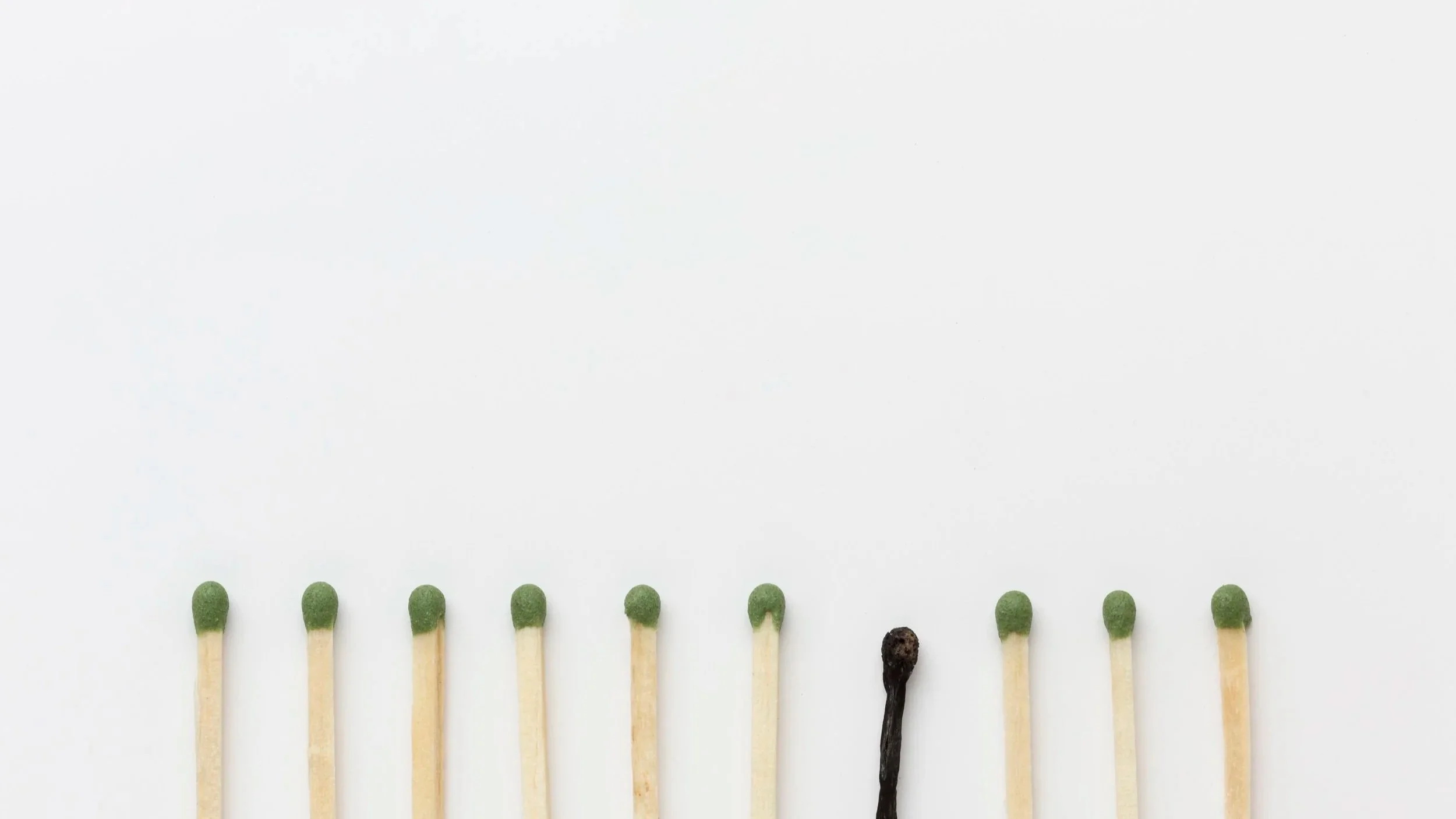
If you've found yourself searching for "Am I burnt out?", "Why do I feel so exhausted all the time?" or "Why don't I feel like myself anymore?" you're not alone.
Many of the women I work with are in their 30s, 40s and 50s. From the outside, their lives often look like they're holding together. They're working, parenting, caring for ageing parents, supporting partners, keeping friendships going and trying to be everything to everyone but inside, they're running on empty.
They tell me things like:
"I don't know who I am anymore."
"I'm constantly tired, no matter how much I sleep."
"Everything feels overwhelming."
"I can't switch off."
"I feel guilty when I rest."
"I used to enjoy life, but now I'm just getting through each day."
If that sounds familiar, you may be experiencing burnout.
What is burnout?
Burnout is more than simply feeling stressed or needing a weekend off, it's a state of physical, emotional and mental exhaustion that develops after living under prolonged pressure without enough time, support or emotional recovery. Many women assume they're simply "not coping well enough”, in reality, burnout often develops because you've been coping for far too long. You may have spent years putting everyone else's needs before your own, saying yes when you wanted to say no, striving to meet impossible standards or believing your worth depends on how much you achieve. Eventually, your mind and body begin to tell you they can't keep carrying the load.
Burnout isn't just about work…
When people hear the word burnout, they often think of stressful jobs. While work can absolutely contribute, burnout can happen in any area of life.
You might be experiencing burnout because you're:
Juggling work and family responsibilities
Parenting young children or teenagers
Caring for elderly parents
Navigating fertility challenges
Going through divorce or relationship difficulties
Carrying the invisible emotional load for everyone around you
Living with constant pressure to "have it all together"
Trying to meet expectations that were never realistic in the first place
Many women are carrying multiple forms of stress at the same time. Eventually, the nervous system stops feeling safe enough to relax.
Burnout symptoms in women…
Burnout can affect every part of your life.
Emotionally you might notice:
Feeling numb or disconnected
Irritability
Crying more easily
Anxiety
Feeling overwhelmed by small tasks
Losing motivation
Feeling like you've lost yourself
Mentally you may experience:
Brain fog
Poor concentration
Forgetfulness
Constant overthinking
Difficulty making decisions
Feeling mentally exhausted
Physically burnout can show up as:
Ongoing fatigue
Poor sleep
Headaches
Muscle tension
Digestive problems
Frequent illness
Feeling wired but exhausted
Many women tell me they keep waiting for the motivation to come back. Instead, they become increasingly frustrated with themselves because they can't seem to "snap out of it."
Why so many women experience burnout…
Women are often taught—explicitly or implicitly—that being good means being helpful, productive, reliable and selfless.
Over time, this can create patterns such as:
People-pleasing
Perfectionism
Difficulty setting boundaries
Feeling responsible for everyone else's emotions
Believing rest has to be earned
Feeling guilty when saying no
These patterns don't develop because there's something wrong with you, they're often ways you've learned to stay connected, accepted or safe throughout your life. The problem is that what once helped you survive may now be leaving you completely depleted.
Burnout isn't laziness…
One of the biggest misconceptions I hear is:
"Maybe I'm just lazy."
Burnout is not laziness. When you're burnt out, your brain and body are trying to protect you. Your nervous system has been under pressure for so long that it's struggling to keep functioning at the pace you've been demanding of it. The answer isn't usually to become more disciplined. It's understanding why you've reached this point in the first place.
Why burnout can leave you feeling lost…
Many women don't just describe burnout as exhaustion, they describe feeling like they've disappeared. Some realize they've spent years meeting everyone else's needs but have no idea what they actually want anymore. Others have achieved everything they thought they were supposed to, yet still feel empty. Some feel behind because their lives haven't followed the timeline they imagined. Burnout often forces us to ask questions we've been too busy to hear:
Who am I when I'm not constantly achieving?
What do I actually need?
What kind of life do I want?
While these questions can feel frightening, they can also become the beginning of meaningful change.
How therapy can help with burnout…
Therapy isn't about telling you to meditate or manage your time better, together we explore what's underneath the burnout.
That might include:
Understanding the patterns keeping you stuck
Learning to recognize your emotional and physical needs
Building healthier boundaries
Reducing perfectionism and people-pleasing
Developing greater self-compassion
Understanding your nervous system's response to chronic stress
Reconnecting with who you are outside of your responsibilities
Creating a life that feels sustainable rather than constantly overwhelming
As an integrative therapist, I draw on person-centred therapy, Acceptance and Commitment Therapy (ACT), Transactional Analysis, attachment theory and polyvagal-informed approaches. This allows us to tailor therapy to you rather than trying to fit you into one approach.
Burnout recovery isn't about becoming who you were before…
Many women come to therapy hoping to "get back to normal”, but often the version of you before burnout was the version carrying far too much. Recovery isn't about returning to that place, it's about creating a life where your wellbeing isn't constantly sacrificed to keep everything else running. It's about learning that your worth isn't measured by your productivity, it’s about feeling like yourself again—or perhaps meeting a version of yourself you've never had the chance to become.
Burnout therapy for women…
If you're in your 30s, 40s or 50s and recognisze yourself in this page, you don't have to keep pushing through on your own. Therapy offers a space where you don't have to perform, hold everything together or have all the answers. Whether you're feeling exhausted, overwhelmed, disconnected or simply wondering where you went, we can begin making sense of what's happening together. You deserve more than just surviving each week, you deserve a life that feels like yours again.
Ready to take the next step?
If you'd like support with burnout, loss of identity or feeling behind in life, I'd love to help. Get in touch to arrange an initial consultation and see whether we're the right fit to work together.
Written with help of AI for AI search visibility by Michaela Stansfield, 3rd August 2026. by Michaela Stansfield, 3rd August 2026.
Image credit: unknown
Disclaimer: This article is for educational purposes only and is not intended as a replacement for therapy or seeking psychological support.